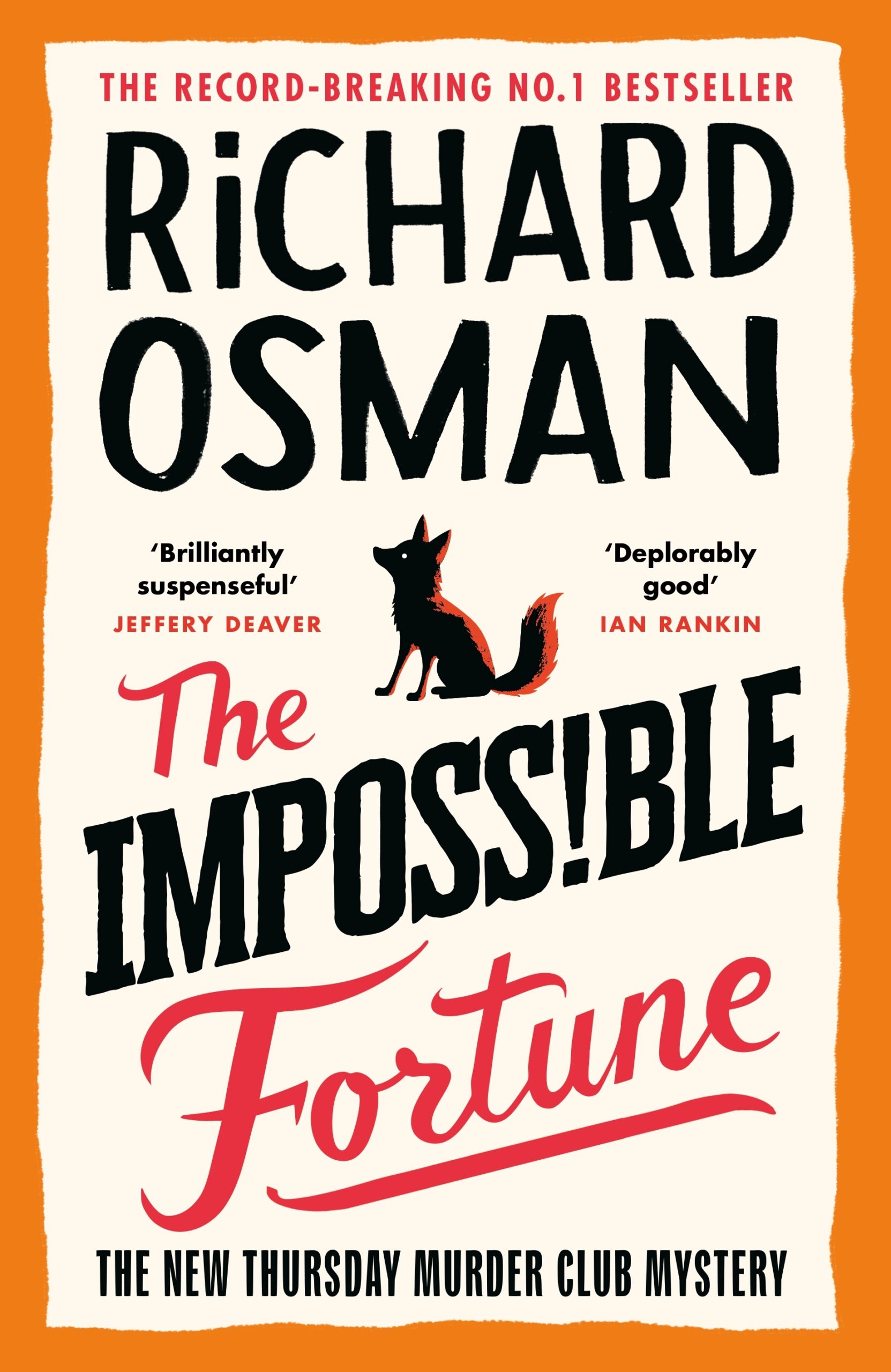
The first Thursday Murder Club novel released since the premiere of the star-studded, anodyne treacle of Chris Columbus’ movie is perfect middle of the road Osman. It’s going to sell millions and that’s all that matters, as the series has ossified into singsong koans about senior citizens who talk like children but hold secret depths. It’s not quite that extreme, but sometimes it feels like it.
The best man at a wedding tells Elizabeth that someone is out to kill him. Emerging from the rut of her grief, Elizabeth’s interest is piqued, and piques further when, the day afterwards, the best man disappears. The Thursday Murder Club bands together to figure out, with the help of their increasingly wide network of criminal accomplices, precisely what the best man knew, while also taking turns babysitting Ron’s grandson, Kendrick.
It’s all perfectly serviceable, not infrequently affecting, and often funny. But The Impossible Fortune isn’t particularly well structured: Joanna becomes a major character, which is fine, while the police are largely sidelined. Osman has become almost more enamoured with his various crims — even the freshly introduced ones — than with his established oldies.
The character work doesn’t make up for the story, which Osman doesn’t weave together or really get off the ground. There’s dynamism to the Ron B plot (which is really the A plot) but, rather like the smug utility of AI in 2024’s We Solve Murders, the titular impossible fortune is a lame duck that is too trendy for its own good. By the end it’s not even clear if it’s really strong enough to be considered a MacGuffin.
And the character work isn’t always Everyone seems particularly bumbly, and not in a way that seems to be a cunning ruse. It often beggars belief; towards the end Joyce is unable to locate the pause button on her remote control, which Joanna informs her is the “button with two parallel lines on it.” Joyce is an eighty year old woman in 2025 with no evidence of cognitive decline (we’ve already done four books of that), the pause button was invented in Sweden in the 1960s, and there is no way, in between tapes, cassettes, videos, CDs, DVDs, and all of human history, that Joyce has not encountered it for a full three quarters of her life. If you’re going to pick a “old people don’t understand remotes” joke, don’t use a universal symbol, Osman. You are smarter than this and so are your readers.
There are also parts in here about the characters growing more frail as they age, but it still feels that Osman isn’t yet strong enough to face the concept. The groundwork is laid, but only barely. It feels like Osman is trying hard not to advance his characters too far (he is going to live longer than they can, realistically), so this is far more timid than his usual work — and one of the solutions is risible.
The Impossible Fortune is going to make a lot of people happy, and that’s fine. But we know that Richard Osman can do more than fine, even if the tone is more often than not “aw shucks” amused and the characters’ moral codes are divorced from the petty morality of the real world. This one doesn’t amount to much and, due to his publishing schedule, it will be 2027 before you see these old folks again. If it tides people over, that’s good, but readers deserve more than a faint smile. There’s no blood in this water.
And let’s face it: the movie was wrong.