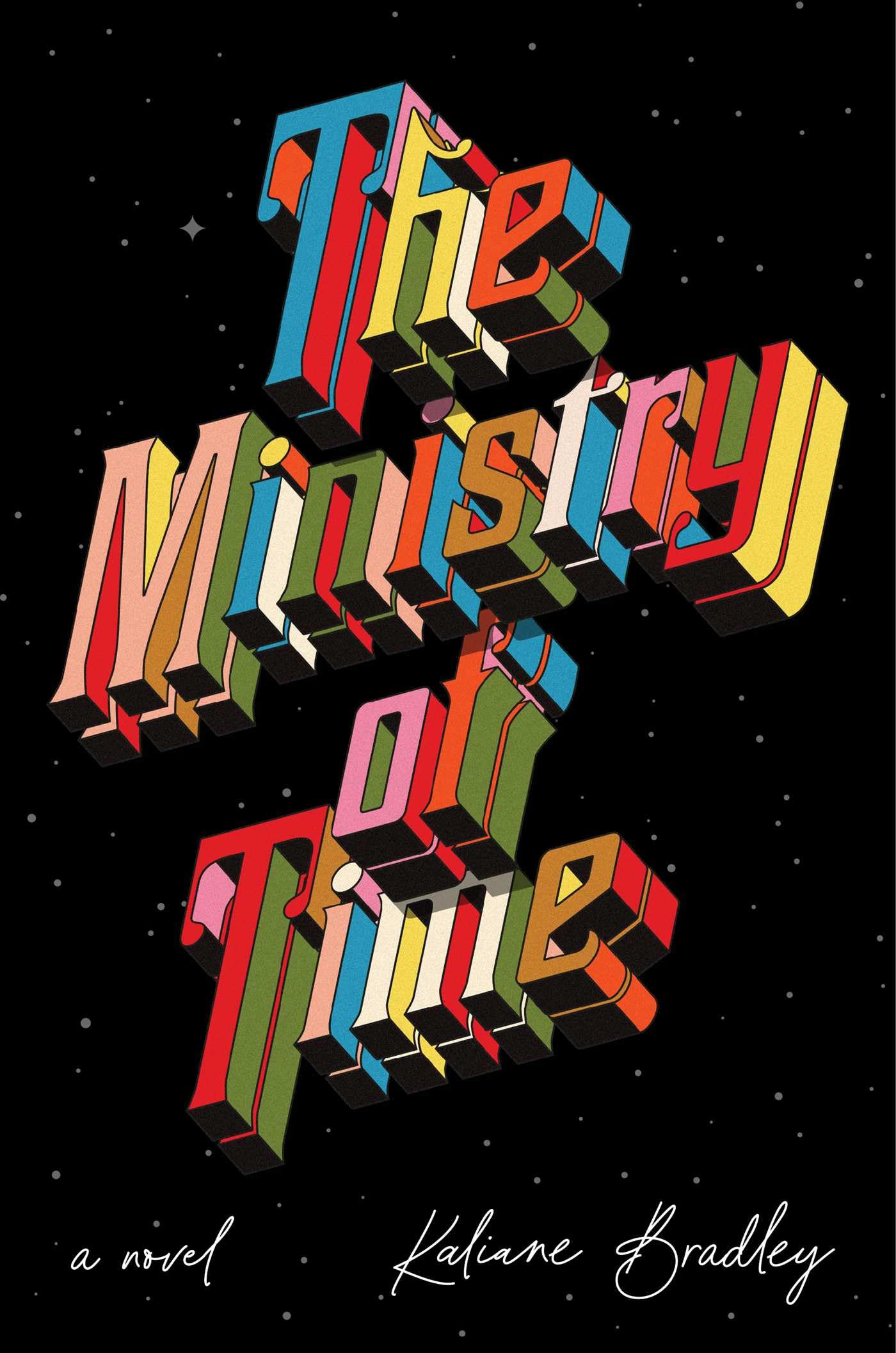
In the literary world, hyper fixations and stories written to entertain your friends can be noble pursuits: famously, Frankenstein and The Vampyre, the source of much modern literary vampire mythology, both sprang from the same friendly competition in a winter of discontent. The Ministry of Time, born of 2020 isolation and a fixation on The Terror, is no Frankenstein, but it reads exactly as if it was written for Kaliane Bradley’s friends.
Whether it succeeds is partly up to how likely you would consider yourself Bradley’s friend, and partly up to how game you are to read fan fiction about a real historical figure that the author is clearly exceptionally horny for. The Ministry of Time drips with lust at the expense of intrigue, so how you take it really depends on which book you want to read.
In the near future, time travel has been discovered and is run out of a facility in London by the newly created Ministry of Time. Our unnamed narrator, the daughter of a Cambodian refugee, is brought on by the Ministry to help acclimatise one of several “expats”, people plucked from time on the grounds that they were going to to die anyway, to the modern era. The narrator is assigned Commander Graham Gore, late of the Erebus and the Franklin expedition, and she is immediately smitten by him. There’s some light intrigue in the background — is there a mole in the Ministry? who is this Brigadier who keeps showing up and asking probing questions? — but much of that is subsumed by the narrator’s unbridled lust.
The normal things that you’d expect in a time traveling fish out of water story are present in The Ministry of Time: Gore is fascinated by modern technology, disapproves of cinema, and is handsome in a way that the men of the 21st century are simply incapable – albeit shorter. His closest displaced companions are more interested in other aspects of the time, like the freedom to be homosexual and not die of the plague (admittedly, two major perks if you’re both inclined that way and don’t want to die). Other expats are less capable of being cured of their bigotries or, quite simply, are not as interesting to Bradley.
Towards the end, far too late to count as a real third act, Bradley starts suggesting that the vague intrigue that has been sprinkled lightly throughout might be leading somewhere. And it does, but in a way that has been really underdeveloped all throughout. The narrator is fundamentally uncurious about the Ministry and what they do because she is so unbearably besotted that nothing matters to her beyond Gore. Realistically the narrator should be on permanently high alert because her position is unprecedented and there’s much to learn and there’s the occasional political assassination. But she’s not. She doesn’t care at all, and so the reader is barely exposed to the actual nuts and bolts of this profession except to learn that Gore is as good at the job that he gives himself as the narrator is bad at her own. Often The Ministry of Time feels like reading the story of a janitor at MI6, except the janitor doesn’t show up to work most days and when they do they spend most of it cataloguing and analysing micro-aggresions in minute detail, not noticing that a covert nuclear war is being waged and countered in the foreground.
Given that this book is written as a retrospective letter to an unknown recipient, when you read about those micro-aggressions they’re couched in terms of “I should have answered this way” or “that was the moment it all went wrong for me.” The narrator only really worries about how she talks to her female colleagues, and that’s almost exclusively through the prism of race. This is when The Ministry of Time swings towards the didactic and it does not do either of its recipients, co-worker Simellia and big boss Adela, any favours. If anything it hardens the audience against them even as the narrator expresses her regret, and it perhaps says more about professional gender politics than may have been intended.

Beyond this, apart from writing the book as a bodice ripper with limited bodices for the ripping, Bradley has a tendency towards the memeish in her writing. If you paraphrase the “normal to want and possible to achieve” tweet in your text without comment, it feels like a failure of the imagination. Yet the end matter of this edition suggests that The Ministry of Time is funny. Humour, like time itself, is subjective. The standard issue fish out of water stuff combined with a minor case of online poisoning works against this book’s favour.
Yet for its many flaws, The Ministry of Time wants to be a good book; it just wants the reader to do more work than it has done itself. For all the tweeness, Gore, Arthur and Maggie are somewhat charming and it’s quite possible to care for them. The narrator is nothing if not accommodating, and acknowledges her tunnel vision. There’s a deep mechanics of time travel that is, again, only superficially touched on, and no real room or call for a sequel. The intrigue, though half-baked by the time it emerges, is genuinely intriguing, there’s just not enough of a breadcrumb trail and the nature of the loop is nearly entirely unexplored. It’s actually bizarre how much the narrator does not care and where her priorities lie, because Bradley really could have had it both ways – particularly if someone who had used the internet had edited it before thrusting it upon an unsuspecting, although remarkably receptive, public. The strengths of The Ministry of Time are not as multifarious as its flaws, but they do elevate it into something somewhat worth reading.
If the imbalance of The Ministry of Time does not bother you – if you’re fine with something that is structured as largely slice-of-life material with a smattering of drama towards the end – then it can be quite successful. A romance-forward time travel novel can still be quite weighty thematically, but The Ministry of Time comes across as gossamer thin. Almost all of the thought-provocation that goes with its tripartite elements — time travel, intrigue, romance — is left off the page until almost the last second. With no time to breathe or grow, we’re left with what little we’re given. This won awards and presumably made Bradley’s friends very happy in a cold and dark time. Maybe that’s enough.
THE MINISTRY OF TIME | By Kaliane Bradley | Hachette Australia | 368 Pages