Stuart Douglas has written two excellent novels to date, but they were undeniably heavy. Shuggie Bain and Young Mungo, with their distinctive names, are not exactly laugh riots. Douglas’ third novel, John of John, continues the trend of being named for a character, but it has a slightly lighter spring in its step. Very serious matters happen between these pages, and yet our titular protagonist won’t let it get him down.
When John-Calum Macleod is informed that his grandmother is dying, he returns to his home island of Harris to help maintain the household with his taciturn and devout father, John. But grandmother Ella doesn’t seem to need Cal, and John only wants Cal to do exactly as he’s told. Discouraged by his lack of success on the mainland, Cal finds himself wondering if things will be any better for him on Harris or if his business is going to inevitably become everyone else’s once more and if what little liberation he has claimed for himself will have to be tamped back down. Despite their diametrically opposed beliefs and lifestyles, Cal and John might have more in common than either suspects.
Set in the late nineties, John of John is redolent with detail that could only be provided with someone intimately familiar with the Scottish textile industry of the time: the licensing involved in weaving, the specific “signature” that each loom bears, and the effort that it takes to survive on a depressed island. John of John is a very specific novel, and the way that Stuart crystallises his time and place is an essential part of its enjoyment.
John of John is Stuart’s first foray into a novel with multiple viewpoints, providing separate stories for both Johns. We are privy to knowledge about father and son that each hopes that the other will never find out; a split-level multigenerational gambit that pays off in ways that neither understands. John is a tyrant of a patriarch, but in a way that we’re able to comprehend and develop sympathy for, even as certain actions surely condemn him. At times, John seems more important than Cal, but that’s the beauty of John of John: each part is defined by the other.
Ella, the lynchpin of the family, and unwilling host of John, is as much if not more of an outcast as Cal. Her Glaswegian nature marks her as more Other than a boy born and raised on the island, no matter how different Cal might be. Surrounded by people who exclude her through use of the Gaelic tongue (which heads each chapter), Ella presents another aspect of grappling with identity in a hostile place when you’re From Away. This trinity forms the novel, but Stuart has many more elements to recommend the piece.
The supporting cast embody the spirit of a small island in Scotland without stooping to caricature. They populate the novel and bring it to life, preventing the Macleods or Ella from existing in an empty expanse. The MacInnes brothers could have been quaint parochial archetypes in the hands of another author, but here they provide the backbone to John’s story. The Macdonald clan, from promising Isla to the constantly thwarted Doll, similarly inform Cal’s own experience. Stuart has endowed all of these characters with a credibility that brings John of John to life. The book feels vital and lived in: a piece on the cusp of a new era for Scotland, for better and worse.
Though this is a novel more of person and place than plot, John of John is a “year in the life” type of novel, and time marches through it. Informed by the history of the place and its people, the changing perspectives of a father, son, and grandmother as they learn more of each other, it’s not about the event but the development. Things happen here, both within the characters and without. There’s a flow and a give and take, but it’s never strictly about what happens. The infinite tiny shifts that move us through our days bring these people to a conclusion that is not inevitable so much as it is understandable. No one is as they were at the beginning of John of John, and while they don’t escape unscathed, it’s fascinating to watch them get there.
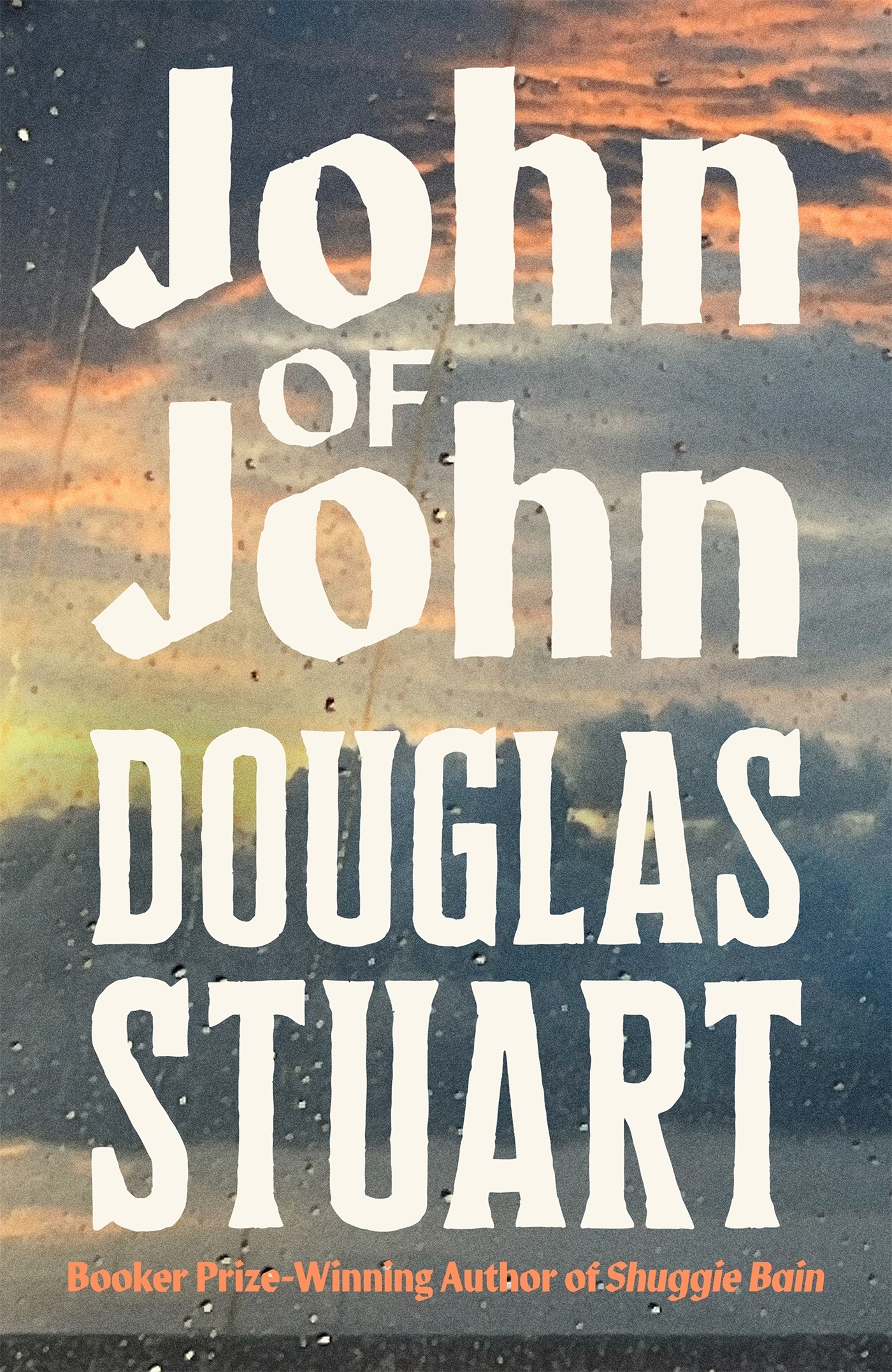
If it proves nothing else, John of John shows in short order that Douglas Stuart has not simply written the same book three times. The agency granted to these characters that was denied the others opens their worlds up, even as various strictures bring them down. This is a carefully constructed novel, right down to the cover: though it may be rain spattered, it depicts light emerging from beyond the clouds. Though undeniably wet, John of John allows the reader that most elusive of emotions granted by books: optimism. Stuart’s third novel is his most accomplished yet, and demands to be relished.
An Advanced Reader Copy was provided by Grove Press for review.