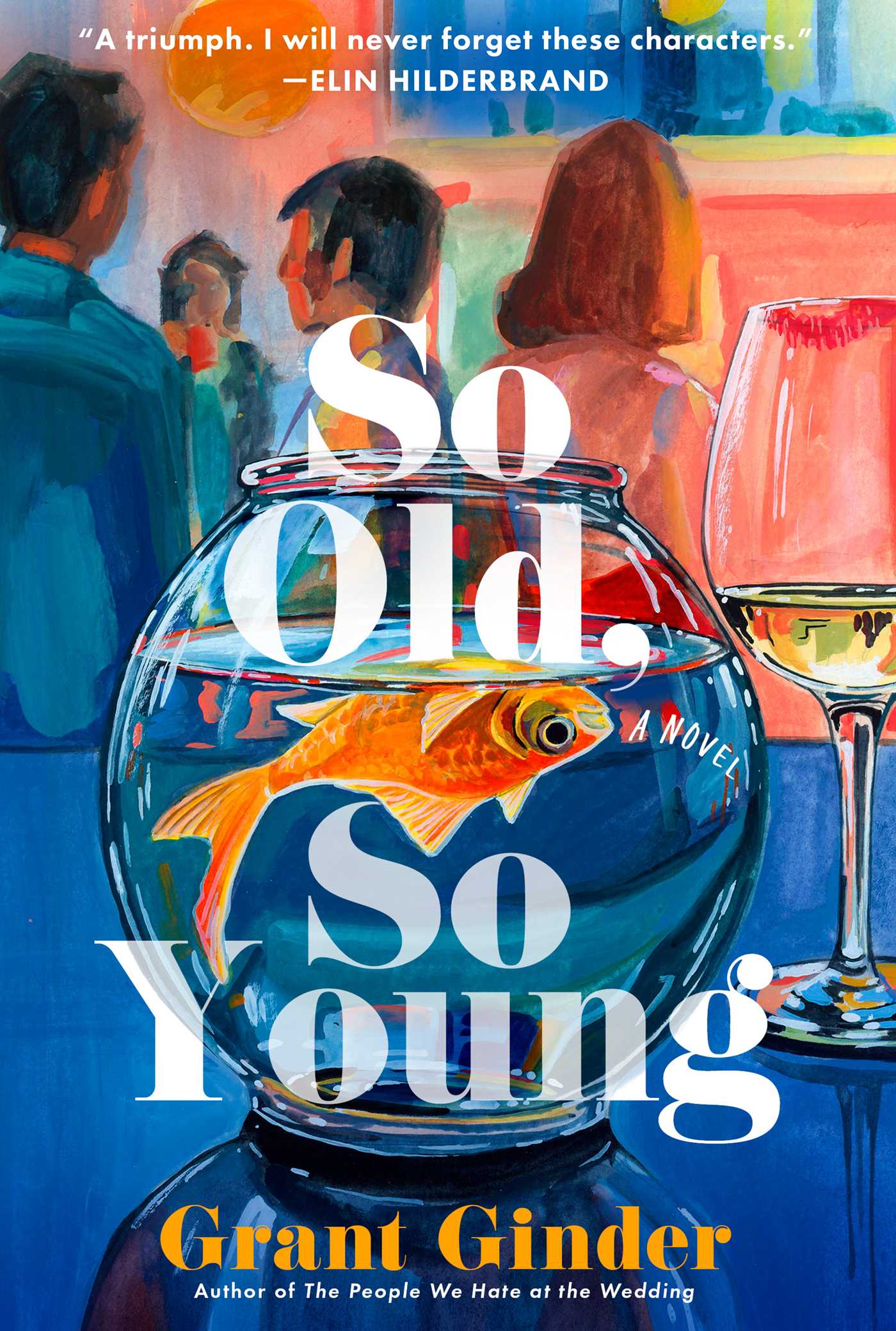
It can be difficult to take a book that you’re technically the target audience for and feel so alienated by it. Grant Ginder’s So Old, So Young is about a group of six college friends across five gatherings over seventeen years of their lives, ending when they’re in their early forties and one of them is dead (the book’s prologue follows one character in transit to the funeral before it jumps back, so this is not a spoiler). But the group is so diffuse and the time scale so long that we never get to spend enough time with any of them. More than that, Ginder — a homosexual himself, no less — has chosen to prioritise the women of the group over the gays, and the straight men that give the women so much grief are merely sketches in the background.
So Old, So Young’s main trap is that Ginder writes as if the gay characters have to follow the rules passed down from publishers of old: they can only have so much screen time and there are only a limited number of outcomes they can have. Adam is the perfect specimen of a man, only glimpsed in passing (although, and the book never judges this, he commits one act that feels at best cruel and at worst murderous), and Richie is the perpetual fuck-up who loses his charms as he ages out of alcoholism and substance abuse being socially acceptable. They are two characters who could shine if the novel was ever allowed to be about them, but no: despite the multiple perspectives, So Old, So Young is about Mia.
Stop me if you’ve read a book about a woman whose hubris lets her ideal man get away in her younger years, who dates a creep because she thinks that’s what she deserves, and then worries that her pursuit of a career has ruined her chance of having a child. This roaringly stock standard scenario is what Ginder ultimately settles on for his through line. You can’t say “but there’s an ensemble who all live different lives to Mia,” because they lack her interiority and exposure. A lot of what this book adds up to is the characters mentally cataloguing their resentments against each other for making different choices to the ones they would themselves have made. By the time you reach 2022 you do wonder why these characters are still in each other’s lives: the American novelist really cannot accept that people do drift apart either naturally or for specific reasons. 2024, the funeral threatened in the prologue, is naturally a time for reconciliation, but some of these people don’t recognise themselves at this point, let alone each other.
One thing that can be said for it is that these characters read as so anxious that they will throw many anxious readers’ real world anxieties into relief, like “I’m not that bad,” a lesser form of the misery tourism that is endemic to so much of modern publishing.
It’s easy to see why So Old, So Young could work for some: if Mia’s story feels somehow fresh, then certainly her dominance of the timelines could be charming; others may argue that Ginder gives exactly the right amount of exposure to his ensemble rather than paying them lip service. But So Old, So Young feels spread too thin in most places and too thick in others. You come to know one character very well and the rest weave in and out of the narrative like wraiths. If you can’t know Marco, you can’t know why Mia is hung up on him; one of the sextet that this book is about doesn’t even get a single viewpoint chapter, and that renders Sasha weaker by contrast. It’s also a decision to show these people at the junctures where their problems are far outweighed by the relative privilege and comfort that they find themselves in — you would be hard pressed to find lives more luxe than those described in 2022. If you have a book deal, an international career, and movie option, you’re doing okay. Maybe you should stop measuring your life by the microaggression.
So Old, So Young is a book with a heart, but that heart is in the wrong place. By focusing on the most satellite member of the group, the one who appears to remove herself from most equations, Ginder has left us with a fairly rote “can a woman have it all?” exercise that gives particularly short shrift to its gays. There are moments that may affect the reader, but So Old, So Young is too scattershot to care that much. You deserve better friends than these, and they deserve better than each other.