Lost Universe is the science fiction anime equivalent of Slayers, by substantially the same staff and set in a parallel universe, and it’s pleasant enough. Unfortunately, it fizzles into very little by the end. Given its relatively small cast, very few of the characters have clear motivations, and the ultimate threat isn’t really threatening enough. When it appears that the void of space is what’s at stake rather than visible land and people, it’s much harder to connect.
As the vanguard of the last sixteen years of British literature, Nick Hornby has a lot to answer for. You can call what he writes what you like – "lad litâ€, "dick lit†(as opposed to chick lit, obviously) – but that doesn't make it any better than what it is: fiction about people who never bothered growing up and show no intention of ever doing so.
This isn't true of his entire canon, but it holds up for both the instigator of the genre, High Fidelity and its spiritual sequel, 2009's Juliet, Naked. Reading about people who choose to wallow in lives that they consider wasted is not particularly fun or illuminating. It's High Fidelity 14 years after the fact: if you thought that collection of characters was developmentally arrested, you will not be at all impressed with this troupe.
Captain America: The First Avenger is a pretty good film. Technically the fifth in the Marvel universe that has been forged since 2008's Iron Man, it is the chronological first. I would go so far as to say it's the best one that they've offered yet, completely failing to pander to easy nationalistic pride while presenting a valid hero's journey and allowing Chris Evans to create a character with some nuance and likability. Intensely stylish and pure of heart, Captain America: The First Avenger is surprising in many ways … except for its wholly and depressingly unnecessary subtitle.
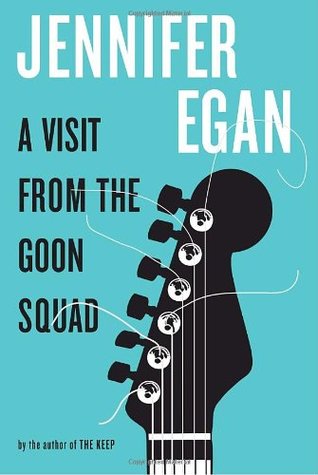
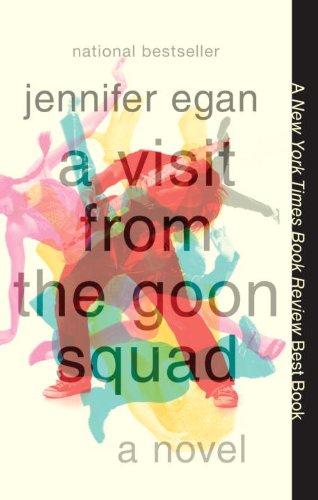
As far as I can tell, you have to be an American to win the Pulitzer Prize. This comes as a relief to me, because I can criticise Jennifer Egan's Pulitzer Prize winning A Visit From The Goon Squad without being asked "Where's your Pulitzer, Mister Critic?†(If I were American, it would hang on the wall of my office, next to a copy of the prize winning article, "Why the world doesn't need Supermanâ€).
I can understand why A Visit From The Goon Squad won plaudits: it's so painfully worthy. Substance abuse, daddy issues and the guilt of being upwardly mobile are all addressed within these thirteen short stories masquerading as a novel. These are themes that are so common in American literature that they have come to define it. I have to wonder if some authors feel discouraged if they have written a book without troublesome parents, casual drug use that turns catastrophic or, in the last ten years, at least passing reference to living in a post 9/11 world.
Egan doesn't have to worry about any of that; it's all in here, and she has the Pulitzer to show for it.
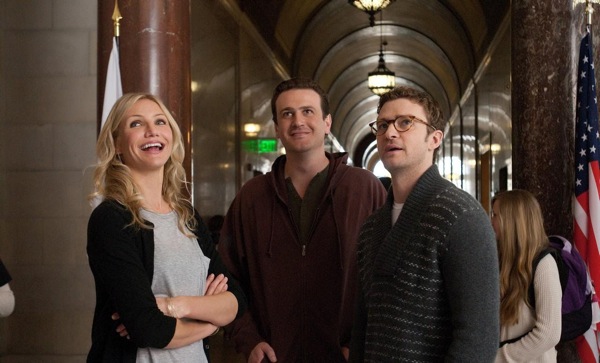
The quadrant of America that rails against the "lamestream media†is the same that claims that the educational system is terrible, that kids don't learn the important things, and that, because education is so bad, funding should be withdrawn from schools. Bad Teacher plays right into the fears of the "heartlandâ€: teachers are apathetic morons and the only lessons that your children need are the filtered teachings of Jesus.
It's not a good movie, and it's hard to see who it's designed to appeal to: it's a dumb comedy with feigned bite, occasionally falling back on racism and homophobia to generate laughs. If you think that the implied erection of a grade school boy is hilarious, then this film is for you.
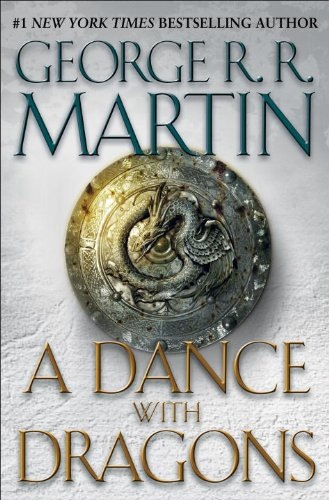
I didn't expect that at the end of the available volumes of A Song of Ice and Fire I would feel like I had run headlong into a brick wall, but that is exactly what happened. I don't want to sound overly dramatic here but, while A Dance With Dragons is more of a "complete†book than A Feast For Crows (in that it covers more characters), it's less satisfactory. A Storm of Swords still stands as the single most delightful entry in this canon.
Enough quibbling, though: is A Dance With Dragons any good? Keeping in mind that I only had to wait one week for it rather than six years, I'm going to say that yes, it is. On reflection, its three main characters get three complete story arcs that naturally bleed into the next part of the story. It's just that, given its eighteen different points of view, a lot of the work that Martin performs between these pages is simple shuffling of pawns across the board so that they may be in place for greater things. None of which happen here.
Contains spoilers for volumes 1-4, not for A Dance With Dragons itself!
The second and third entries in the Tales of Dunk and Egg complement each other so well that it's hard to imagine that they were published seven years apart. It wasn't until I came to The Mystery Knight that I could appreciate The Sworn Sword for what it is. I realise that a large part of this is because of the significance of the characters at play: in The Mystery Knight Dunk and Egg participate in activities that have some bearing on the future of the realm, while in The Sworn Sword they're performing pure acts of hedge knighthood.
The fault in my interpretation lies not in Martin but in myself; with a fuller understanding of the canon of these characters to date I came to enjoy myself much more than I had beforehand. That Martin's work can grow in retrospect as well as in the telling is something that I can get behind.
Published between A Game of Thrones and A Clash of Kings, The Hedge Knight is the first novella in the A Song of Ice and Fire canon, and the first of the Tales of Dunk and Egg. Set approximately 100 years before the events of A Game of Thrones (according to Wikipedia, 89 years exactly), we are presented with a world at relative peace, the Seven Kingdoms ruled by the Targaryens.
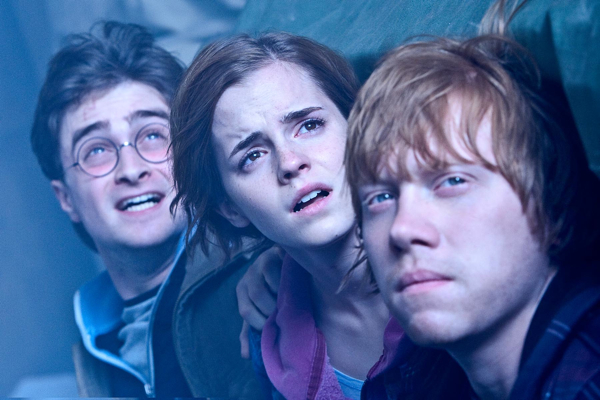
In Harry Potter and the Deathly Hallows Part 2, the Potter franchise ends not with a bang or a whimper, but unending fields of grey. Not shades of grey. Not grey to represent moral ambiguity. Just literal grey. No colour was used in the creation of Harry Potter and the Deathly Hallows Part 2.
This is not to say that it's a bad film (although it does have a bad title), For something that has been effectively ten years in the making, dragging seven films of baggage behind it, this is a movie that relies too heavily on the projections of its audience; David Yates has provided a near blank canvas upon which actors run through motions endowed only with the meaning that the audience chooses. Yates has forced us to do the heavy lifting, spending hundreds of millions of dollars without investing any of it in emotion or gravitas.
I would dearly like to believe that Steven Spielberg isn't a terrible person full of bad ideas, but being presented with the trailer for The Adventures of Tintin: The Secret of the Unicorn is a severe test of my faith. I'm no wholesale motion capture snob, but I don't understand how Peter Jackson or Steven Spielberg could look at what they've created and call it aesthetically pleasing.
Whoever decided that Snowy looked like a dog rather than a series of cotton buds needs to be fired, as well. It's he and Tintin, rendered breathless by Jamie Bell, that get the worst of it all. Tintin, being the title character, needs to look less dumb. It's too late for that. It was always going to be too late. Simon Pegg and Nick Frost, intent on whittling away all of the good will that they've earned over the years, are uninspired thus far.
Next we have Captain Haddock, the most pleasing member of the bunch. He looks like Captain Haddock! Alas, he's been rendered into a bumbling Scot. At this point in the Tintin mythos he's a drunkard, but that's not communicated here. Due to the inexplicable thick accent, the audience is forced to assume that his stupidity is directly related to his country of origin. I know that this isn't strictly fair given that we've only got 2:24 to work with, but trailer cutters should know that first impressions count.
While I believe I will drag myself to see The Adventures of Tintin: Secret of the Unicorn, I don't hold out much hope for it. The sense of adventure might be pointing in the right direction, but the look and the sound are entirely wrong. Had Spielberg attempted to go all the way in either direction – live action and effects driven, or computer generated – he might have ended up with something worth looking at. Secret of the Unicorn is the movie of 2011 that I'm most likely to watch with my eyes closed.