Author: Alex Doenau

Alex Doenau is an Australian film and book critic based in Sydney. His interests include video games, Pokémon, and amiibos as far as the horizon.

Jack and Jill: Adam Sandler hates me and you and everyone we know

In Judd Apatow's long and boring 2009 vanity project Funny People, Adam Sandler plays a successful comedian who made his fortune with a series of terrible and gimmicky comedies (a wizard has turned Adam Sandler into a baby! Only Justin Long can look after him!). In 2011, Funny People has come true.

Yes, Adam Sandler's career has finally caught up with Rob Schneider's. I never thought I'd see the day!


Making terrible movies is nothing new for Adam Sandler, but I think that Jack and Jill has to be a new low. It has to be, because I refuse to accept that he has made a movie worse than this one. I don't make a habit of watching Adam Sandler movies and was burnt terribly by his last non-Apatow vehicle that I saw, so I'll just keep on believing what I choose to believe.


Is there any way that Jack and Jill can be good? Adam Sandler plays himself and his twin sister, living in an idyllic and totally unsympathetic capitalist dystopia. Every single problem that the Sandlers face in this trailer can only be experienced by a stupidly rich person: "I hope my sister doesn't ruin my pool by riding on a jet ski!” "I can't believe Al Pacino is hitting on me court side at a Lakers game!” Even their apparent reconciliation, awkwardly shoe-horned  in the midst of the trailer, comes in the form of Double Dutch skipping on the $1.2 billion USD largest passenger ship ever built.

I know that the millions of families who go and see this movie will personally identify with the sickening bourgeoisie antics of Adam Sandler and Adam Sandler! If anyone recalls Macaulay Culkin's Richie Rich from 1994, the entire concept was that Richie had so much money that he had no idea how to relate to society. A more "modern” example like Russell Brand's remake of Arthur covers similar material, denouncing wealth while revelling in it.

The nightmare that the Sandlers live in with Katie Holmes is presented as if it is a wonderful life that can only be spoiled by outside influence. Humanity is presented as destructive to the American way of life, which is the right to own more than you could ever possibly need while systematically ignoring your family.


Of course, "none of this would matter” (it would) if the movie looked funny at all. It doesn't. It has no capacity for laughs, existing only to bring further shame to Al Pacino, who I understand has made some good movies in his time … but that was so long ago I can't remember. I can't picture Katie Holmes and Adam Sandler having anything approaching chemistry, and the cute adopted child cribbed from Easy A is more than a little on the nose. I can't wait for this movie to make billions and reinforce my total lack of confidence in the universe.


I've got one thing to say to you, Adam Sandler: Don't Bring Me Down!

Spoilers of Ice and Fire, Part II

A Week of Ice and Fire, Bonus Round II!

In the second part of the two part “Spoilers of Ice and Fire” series, I look into some other characters. I have no idea how I’m doing for timing, but by the time this is published I firmly hope to be reading A Dance With Dragons.


Remember that if you don’t want to know what has happened in the books leading up to A Dance With Dragon, avoid reading this for your own sanity!


Spoiler city! So many spoilers for A Game of Thrones to A Feast For Crows you won't know what to do with yourself!

Spoilers of Ice and Fire, Part I

A Week of Ice and Fire, Bonus Round I!


The rest of the Week of Ice and Fire has been dedicated to writing generally spoiler free impressions of A Song of Ice and Fire to date, carefully dancing around ruining anything for anyone. The final entries, however, are devoted to something else entirely: my thoughts on specific and sometimes horrific things that happened within the first four books.


If you don't want to know stuff that happens in the books, you'll want to avoid this. If you're already familiar with the books, or you don't care if you find out things ahead of time … step right in!


Spoiler city! So many spoilers for A Game of Thrones to A Feast For Crows you won't know what to do with yourself!


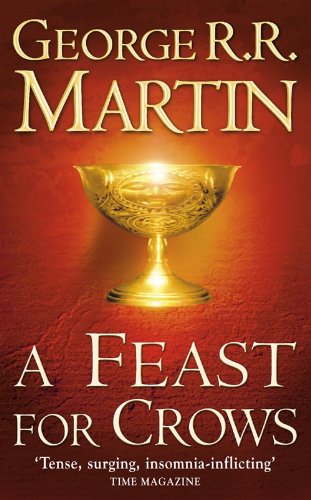
A Feast For Crows

A Week of Ice and Fire, Day Four!

Ah, here is where it all ended six years ago. And this is only half the story – George R.R. Martin chose to split this book geographically, with only the southrons getting any attention in this volume. For news of those in the north and the east, we have to wait until A Dance With Dragons. This means two things: A Feast For Crows and A Dance With Dragons are both sequels to A Storm of Swords, and we won't get a follow up on the events of A Feast For Crows until The Winds of Winter is published … whenever that may be.


This isn't all bad, because A Feast For Crows is a pretty dang good book. Yet, even more than A Feast For Crows, Martin has truly cultivated his taste for insane cliffhangers. I understand now why people have been so upset for the last six years (particularly as this volume has Martin "devoutly hoping” to release A Dance With Dragons within a year – signed June 2005), but … they're not going to get any answers. Nothing but questions await us next week, but I don't plan on devoting my life to cursing Martin's name for taking his own sweet time.


Contains the risk of spoilers for the three books that came before it!

A Storm of Swords

A Week of Ice and Fire, Day Three!


I couldn’t find the laughably terrible cover that I have at home at a suitable resolution online, and the new “classy CG” covers are just awful so I’ve declined the opportunity to put them up. Just imagine a book with a really cool cover, because damn fantasy gets poorly treated in the cover stakes.

A Storm of Swords is the most exciting entry in A Song of Ice and Fire of the first three. It's interesting to say this because it's essentially an exercise in sadism for Martin from start to finish. Gelling in a way that A Clash of Kings never quite managed, the sheer dynamism on display makes for an incredibly entertaining book. Certainly, the entertainment value falls within the bounds of believability, but … truly, nothing is sacred to Martin, and that is amazing.


Contains spoilers for A Game of Thrones and A Clash of Kings

A Clash of Kings

A Week of Ice and Fire, Day Two!

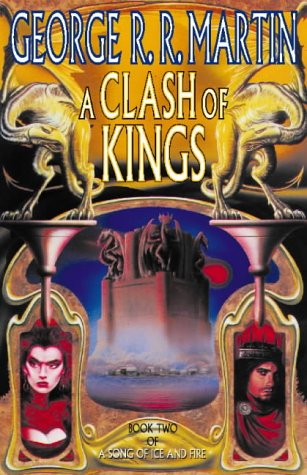
Of Kings!


A Clash of Kings is a good book, and, while it delivers on most of the promises of A Game of Thrones' explosive ending, it makes a point of emphasising the fantasy roots of the series and is significantly less pleasant all around in its developments.


Contains spoilers for A Game of Thrones

A Game of Thrones

A Week of Ice and Fire, Day One!

I've made a huge mistake.


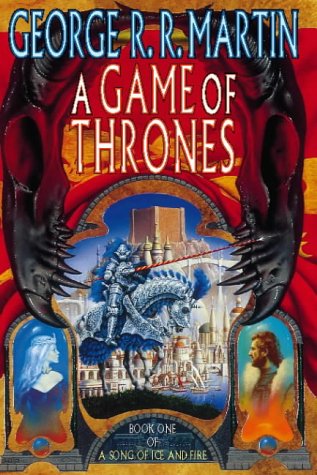
It's all happening for George R.R. Martin this year. With the long awaited A Dance With Dragons due next week and Game of Thrones now a hit HBO series, he's probably selling more books than he has since 2005. I come to praise Martin, not to bury him beneath the detritus of the last fifteen years.


Now I'm going to take you back to ancient times: 1996. Robert Jordan was alive and good for pull-quotes, Terry Pratchett was putting out both Feet of Clay and Hogfather in the golden age of Discworld, and Neil Gaiman was finishing up Sandman and producing Neverwhere. They were good times.

Then came George R.R. Martin with Game of Thrones, first in the projected trilogy (now a septet) that comprises A Song of Ice and Fire. Without any of the baggage of the rest of the series I must say: this is a pretty damned good book. Certainly, it has some elements of the territory of genre: incest, rape, general unpleasantness, but the thing is that Martin presents these instances impartially, without eroticising them. Where another author might think that rape is the coolest thing going and will take every opportunity to insert it into their narrative, Martin uses it as what it is: a bad act committed by bad men. There are no heroes for him to debase with his fetishes … thus far.

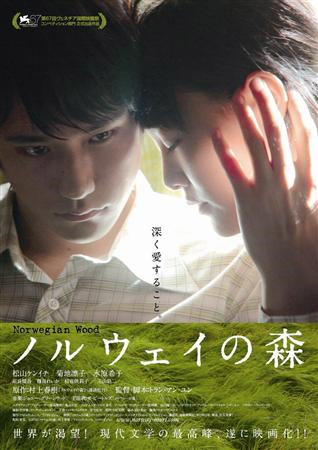
Norwegian Wood (film)

How I missed those loving arms

It’s easy to have bad ideas. One such idea was “Let’s make Norwegian Wood into a movie!”
Norwegian Wood, Haruki Murakami’s breakout novel, has in my uninformed opinion influenced Japanese cinema culture in the 24 years since it was first published. The nostalgic student romance genre has been essentially perfected as an art by a long series of directors – some distinctive, some interchangeable, but many worthwhile.

The same can’t be said of Anh Hung Tran, who has taken only the bad lessons and excesses of so much student melodrama and fashioned them into a movie that is not only superficial, but deeply unsatisfying. I don’t see how anyone who has read the book could be pleased with this result but, more than that, it is a failure of the cinematic form. Dull and soporific when it isn't being irritating and shrill, there's nothing here to recommend.

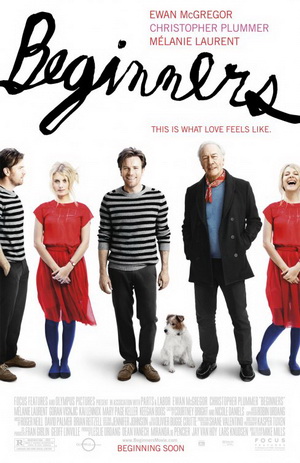
Beginners

No one on this poster is this happy in the film itself.

Beginners is the sort of movie that I’m required by law to love, but I couldn't. Emotional distance is a huge factor in too many contemprary movies: fundamentally broken characters who don’t care about fixing themselves, choosing instead to fixate on their moping don’t make for particularly interesting movies. This is not to say that you can’t make films about depression or depressed characters, just that, like any other film, you should work on making them engaging in at least some regard.

That Beginners tells such a personal story makes its distance unforgivable.

Oliver (Ewan McGregor) is recovering from the death of his four years out of the closet father Hal (Christopher Plummer).He meets Anna (Mélanie Laurent, who still hasn’t learned to pick them after Inglourious Basterds), an actress, and they kind of have a relationship but kind of don’t. The film features parallel story lines of the last months of Hal’s life and the beginning of Oliver and Anna’s relationship.

Mike Mills wrote Beginners in response to his own father’s coming out. You would think this would endow the movie with a degree of feeling, but it doesn’t. The whole exercise is remote. Oliver’s mother is represented in flashbacks reminiscent of Harold and Maude; Oliver tries to trace his melancholy to his parents’ presumed loveless marriage, but the answer is much simpler: he’s a sad sack, endlessly waiting for a lion.

It’s easy to blame your parents for everything, especially when you deliberately don’t seek parts of the story that make sense of their emotions and actions. The childhood flashback sequences of this movie don’t particularly prove anything except that Hal felt absent and Oliver misses his mother. These scenes are quirky but offer little. The film's whole structure doesn't make much sense; the parallels aren't easy enough for us to draw, and what Oliver is doing always feels the same regardless of whether his father is alive or dead.

Periodically the film is broken up by Oliver’s illustrations of the history of sadness. These are for his job, where they prove profoundly unsaleable. They were drawn by Mills himself, and they seem too pithy to really reflect what is supposed to be fighting to release itself from Oliver. At other times the film tries to force collages of "these were the days”, utterly failing to set the scene and continuing to take the audience further and further away from the film and from Oliver himself.

Ultimately Oliver’s depression becomes the entire content of the film: that his father was gay and died seems incidental; that he can’t connect and commit to a potential girlfriend is symptomatic but irrelevant.  Depression can feel like your life has become a total blank, and largely meaningless to you. It can be frustrating. Oliver is undeniably frustrated; he can touch but he cannot feel. Mills has injected this melancholy into the very marrow of Beginners, resulting in a film that is bland and tasteless.

It’s disconcerting to feel this disconnect: dead and dying parents are supposed to be a safe way to get audiences to discover their emotions. Christopher Plummer attacks the role with gusto, but it’s always presented through the filter of Oliver. He is shown feeling grief, but we feel nothing. We're given the memory of this grief, but it is the grief of a man looking at himself and thinking "where did I go wrong?”. I would dearly have liked to feel sad that Hal had died, but Mills never let me.

Any movie with a gay theme and a big name cast like this is going to get a special kind of attention from the outer limits of media. Beginners has been well received, and that's the mystery: there's really nothing to it. We're bathing in misery which is only occasionally leavened by imagined subtitles from Oliver's dog.

Beginners has nothing to say about romantic relationships, nor does it explore the particularly fascinating reality of a man finally allowing himself to be gay at 75.  A guy is sad, his father was happy. Guy continues to be sad, maybe thinks he shouldn't be sad any more but he's not sure.

You don't have to like Beginners. It's not really that good a film, tackling important and interesting issues in the least engaging way possible. Mike Mills was perfectly suited to make this film but he failed his material, gazing so far into his own navel that he disappeared into it.

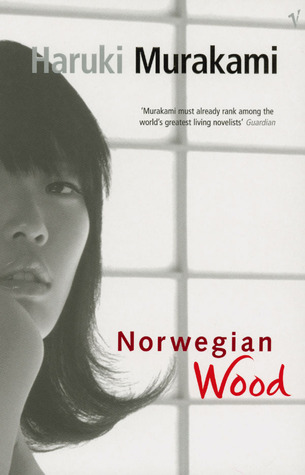
Norwegian Wood


When people see that you’re reading Norwegian Wood, there are two possible responses: “What’s that?” and, of course, “Isn’t it good?”

Ah, the sixties. They were a time. I think, despite my constant exposure to Japanese film, that this is my first time reading Japanese literature. I would like to think that, while this novel is apparently part of a larger canon of sixties student reminiscences, it has been heavily influential in the field of Japan’s romantic drama film industry. That’s precisely what it is: a heavily evocative mood piece about a guy who finds it very difficult to strike any kind of mood at all.

While this is my first foray into reading Japanese literature, it is exceedingly clear that Murakami’s work has been influential in the now common cinematic genre of “sixties student romance”. While a lot of those films have more of the melodrama about them than anything else, they have been touched in some small way by Murakami’s words.

Upon hearing the Beatles tune “Norwegian Wood”, Toru Watanabe remembers his student days and the women he knew, how they affected his life. One in particular, Naoko, may well have been the woman for him … But we know from the first page that it was not to be.

Murakami’s voice, in the translation at least, comes across as strongly evocative of the era it describes. Large swathes of Japan look the same today as they did in the sixties and one could likely do a Norwegian Wood tour of Japan if they so desired, but they don’t need to; Murakami’s is skilled enough to make the reader believe that they’re remembering their own late teens, albeit at a cold remove.

For all his lyricism, Toru is undoubtedly a blank cypher of a character. Not particularly talented in any field, he’s defined by his relationships with the women around him: he is a sponge with no self-esteem, equipped to absorb stories and carry on without an idea of his own self worth. He has no stories of his own to tell people, so he either discusses The Great Gatsby (to minimal success) or his hard-done-by roommate (whose departure he mourns because he now lacks the inspiration to generate new funny stories).

So Toru is at his best when the women in his life are relating their own journeys to him. They have done things, they feel things, that Toru has never allowed himself to engage with. It is with them he is able to relax, but also with them he gets too uptight to manage. He’s not as functioning a member of society as he would have you believe.

Where the book deals sensitively with mental illness, it is merciless on the subject of narcissism. We realise that we don’t have to like Toru because, despite his self-loathing, he is completely oblivious to anything that doesn’t directly involve him. Midori, one of the book’s four women, has a different brand of self-regard that both complements and conflicts with Toru’s own.

Were it not for the constantly looming spectre of suicide, Norwegian Wood could likely represent the sixties student life of just about anywhere. There is a unique Japanese nature to the experience but, despite some very specific situations, it does feel that it contains a universality, albeit one that took 14 years to be dispersed universally. Due to Toru's detached nature it's difficult to have an emotional response to the material; it's like reading through a fine gauze curtain, occasionally taking pause at a particularly impressive passage.

Murakami has ultimately produced an artfully rendered work of slightly broken humanity. Isn’t it good?