I Shall Wear Midnight

I've finally done it. I've run out of unread Discworld books. No more Discworlds until the next one. This used to be the case with me all the time from 1998 to 2006, but the flavour of "no more Discworld for now” is different in 2011.

I Shall Wear Midnight is not the final Discworld book, and nor should it be read as such. It is possibly not even the final Tiffany Aching book, but it certainly brings this part of her story to a close.

A lot of people don't like Pratchett's "Discworld books for Younger Readers”, because they don't consider themselves "younger readers”. As it is a long established fact that the only people who read Discworld books are eleven year olds named Kevin ("I am an eleven year old named Kevin and so is my wife”), these people need to stop cutting off their noses to spite their faces.

Mary Ann in Autumn

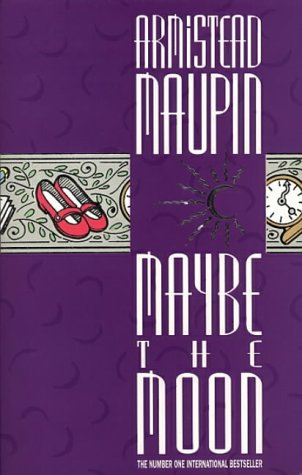
Michael Tolliver lives! … Again!
A three year gap is significantly less than eighteen years. On top of that, this is the first Tales of the City book that I have read contemporaneously. Do you have any idea how strange it is to shift from Maupin speaking to people who predate me to him speaking directly to me, the world in which I'm living? It's a stretch.

I think that Tales of the City books work best as capsules of their time, which of course means, except for Sure of You, they improve with age. That Maupin now speaks of Twitter and Facebook with varying degrees of understanding feels strange to me. Did readers thirty years ago think that D'orothea and DeDe's involvement with Jonestown was simply bizarre (well, it was by default, but … more bizarre?)?
All this is not to say that Mary Ann in Autumn is a bad book or disappointing. For me, at least, it is essential for its service in returning Mary Ann to her figuratively ancestral home. I don't think I'm exaggerating when I tell you how badly betrayed I felt by her in Sure of You. Mary Ann is not absolved of her sins, but it seems she may well be redeemed.

Battle Hymn of the Tiger Mother

It’s hard to tell what Amy Chua was thinking when she wrote Battle Hymn of the Tiger Mother. Is she seeking approval for her parenting methods, which she unwittingly but directly claims has successfully raised approximately 1.3 billion of her fellow "countrymen”? The fact that Chua was born in America and that her parents explicitly and repeatedly condemn multiple aspects of her parenting style as too harsh and unthinking kind of undermines this theory.
Chua tries to help us out from the start with her intro (also featured on the cover!):

This was supposed to be a story of how Chinese parents are better at raising kids than Western ones.

But instead, it’s about a bitter clash of cultures, a fleeting taste of glory, and how I was humbled by a thirteen-year-old.

What does this mean, precisely? It means that you have to read about 90% of terrible decisions and harping before Lulu, Chua’s younger daughter, snaps and tells Chua that she’s doing everything wrong, and that her overbearing nature has meant that she has taken the fun out of everything that was once loved. Chua responds to this by giving Lulu a small degree of choice, which she herself manipulates from the shadows. It takes her more than sixteen years of parenting to accept even the smallest change, and even then the thought of Lulu doing her own thing without parental intervention "pains [her] every day”.

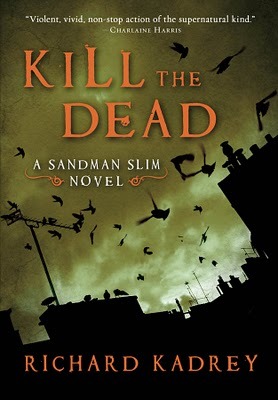
Kill the Dead

What if they threw a zombie outbreak and nobody cared? Sure, there are people dying in the streets, but they're just humans. They don't even know how to do magic? Who gives a damn about them?

That seems to be the concept of Kill the Dead, a book almost wholly lacking in the human element. Every character is above the mass slaughter of the citizens of their surrounds, because they've got bigger problems elsewhere: Heaven and Hell are far more important than the concerns of 4 million people in danger of being eaten.

Unseen Academicals

When you read a Discworld book, you read it on two levels: its worth in the overall Discworld canon and its worth as a single cohesive novel. When I started my undertaking of rereading the entire Discworld set a few years ago (I got caught up on The Last Hero for a while despite the fact that it is literally a less than two hour read), the only Discworld novel I hadn’t read was Wintersmith. Since then, Unseen Academicals and I Shall Wear Midnight have joined that shameful list. When I read Wintersmith, I felt great shame. That I had yet to read Unseen Academicals until today is not so much a cause for shame as one for sadness.

Resumption of service

Hey, remember when I was on a roll? Then I got fairly ill and had to write off the majority of January. I will be back soon, and hopefully better than ever before! (oh, come on, it wouldn’t be hard for me to be better than I used to be)

Michael Tolliver Lives


I know that an exclamation mark would be hyperbolic, but I think that, after an 18 year absence, “Michael Tolliver Lives!” is an appropriate title. Abandoned by his author in 1989, Michael Tolliver has been up to a lot in his absence. This wasn’t originally going to be a Tales of the city book, but Maupin realised that Michael Tolliver was the perfect vehicle for an ageing gay man.

This explains why it’s written in the first person, and how everything seems to grow organically from that original concept. It can be dangerous resurrecting beloved characters after a long time away, but Maupin has let them all live and die natural lives in the interim.

The shift from third person to the first is not without its problems: unlike The Night Listener, where the narrator was addressing his hypothetical radio audience, there is no indication of whom Michael is speaking to. This is not normally a problem with other first person books, but it’s clear that Michael is addressing someone, and I refuse to believe it’s me. He reminds you of things a couple of times and he explains things that don’t strictly need explanation.

Because we’re presented the exclusive viewpoint of Michael, other characters – Brian in particular – get short shrift from Maupin. This isn’t a failing as much as it is a necessary evil. Just because one wants an author to overstuff a book doesn’t mean that they should. Maupin shows more restraint here than he has previously.

Of course, the other side of the double edged sword is that the exercise is rather more personal than any previous entry in the Tales canon. Rather like Maupin’s prior effort, The Night Listener, I found myself tearing up or even outright crying at times in the last fifty pages.

I welcomed this book because I considered Sure of You a huge downer to end the series on. Maupin doesn’t idolise his characters, and so they sometimes make horrible decisions and become people that you can easily fall out of love with – as I did with several. The character arcs from book to book actually made me worry about reading on for fear that the characters – not Maupin – would compromise themselves.

Michael Tolliver Lives is an invigorating experience. It sounds stupid, but it is “life-affirming”. Maupin writes death and loss very well, having experienced it too often first hand (this series, after all, spans pre-AIDS society to “post”), but he also writes survival. His honesty is brutal, and I don’t agree with every stance that Michael takes, but I don’t have to. I’m touched in such a way that I don’t have to internalise the whole experience. Ultimately, Michael Tolliver Lives, despite the way that it treats some characters (Mona!), feels like more of a gift from Maupin than anything else.

Mary Ann in Autumn, only recently published, promises to be a return to the original format of sprawling and unlikely storylines that intertwine in vague and strange ways. Mary Ann’s return as a focal character might set everything that was wrong in Sure of You right once and for all.

12 Months of Movies 2010: D-F

It was around this time that I realised that I saw a fair few French films this year and that a lot of them did nothing for me. How can I be against French cinema? Truly,  I am a monster! Animation makes a strong showing, idiots leave a slightly sour taste in my mouth.

Date Night to Four Lions!

12 Months of Movies 2010: A-C

At last! My year in review! And when I say a year, I really mean the whole thing: all 90 “official” Australian 2010 releases I saw, and however many festival films I saw in their own special entries. Now, curating it alphabetically means that no entry has a “theme” (until I reach the festivals, of course), but it also means it’s a damn sight easier to search. So here, your definitive guide to my 2010 in films (with perhaps some 2009 refugees to come at the end).